7 Best Routers for Starlink That Boost Every Signal
By George 10 min read
Disclosure: This post may contain affiliate links. If you buy through them, we may earn a commission at no extra cost to you.
If you’re using Starlink, your router choice directly affects your speeds, coverage, and reliability. The wrong router creates dead zones and bottlenecks, while the right one unlocks Starlink’s full potential. Whether you’re at home, in an RV, or running a small office, there’s a specific router built for your setup. The seven options below cover every use case, so you can match your needs to the right hardware.
| Starlink Gen 3 Wi-Fi 6 Dual Band Router |

| Best Overall | Wi-Fi Standard: Wi-Fi 6 (802.11ax) | Coverage Area: ~2,000 sq ft | LAN Ports: 2 × Gigabit LAN | VIEW LATEST PRICE | Read Our Analysis |
| Compact Dual Band Mini WiFi Router (Starlink Compatible) |
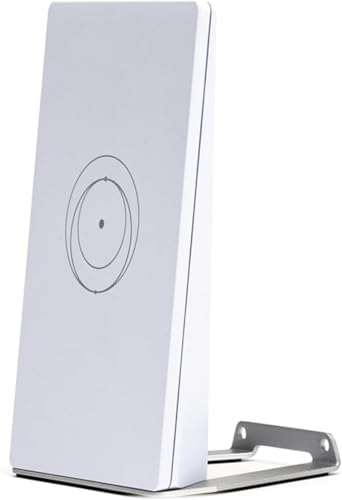
| Budget-Friendly Pick | Wi-Fi Standard: Wi-Fi 6 (802.11ax) | Coverage Area: ~1,185 sq ft (110 m²) | LAN Ports: 2 × Gigabit LAN | VIEW LATEST PRICE | Read Our Analysis |
| Mini Mesh Wi-Fi Router Compatible with Starlink |

| Best Mesh Extender | Wi-Fi Standard: Wi-Fi 6 (802.11ax) | Coverage Area: ~1,250 sq ft | LAN Ports: 2 × Gigabit LAN | VIEW LATEST PRICE | Read Our Analysis |
| Star-Link Gen3 Compatible WiFi 6 Mesh Router |

| Best Wide Coverage | Wi-Fi Standard: Wi-Fi 6 (802.11ax) | Coverage Area: ~3,200 sq ft | LAN Ports: 2 × Gigabit LAN | VIEW LATEST PRICE | Read Our Analysis |
| Mini WiFi Router for Home Office & Travel |

| Best For Travel | Wi-Fi Standard: Wi-Fi 6 (802.11ax) | Coverage Area: ~2,500 sq ft | LAN Ports: 2 × Gigabit LAN | VIEW LATEST PRICE | Read Our Analysis |
| Starlink Mini Kit Portable Satellite Internet System |

| Best Portable Kit | Wi-Fi Standard: Wi-Fi 5 (802.11ac/a/n) | Coverage Area: Not specified (portable/outdoor use) | LAN Ports: 1 Ethernet port | VIEW LATEST PRICE | Read Our Analysis |
| TP-Link Deco XE75 AXE5400 Tri-Band WiFi 6E System 3-Pack |

| Best Third-Party Option | Wi-Fi Standard: Wi-Fi 6E (802.11ax, 6 GHz capable) | Coverage Area: ~7,200 sq ft (3-pack) | LAN Ports: 9 × Gigabit LAN (total across 3-pack) | VIEW LATEST PRICE | Read Our Analysis |
More Details on Our Top Picks
Starlink Gen 3 Wi-Fi 6 Dual Band Router
The Starlink Gen 3 Wi-Fi 6 Router stands above the rest as the top overall pick for Starlink users. It covers up to 2,000 square feet and supports Wi-Fi 6 technology across tri-band transmission. You’ll get two LAN ports, speeds up to 1,000 Mbps, and upstream capacity reaching 9,600 Mbps. Connect it to gaming consoles, smart TVs, smartphones, and PCs without issue. Use the app to manage your network, set parental controls, and monitor activity. If your home has stone or concrete walls, add a second router to extend coverage. It’s compatible with Gen 3 and Starlink Mini kits only.
- Wi-Fi Standard:Wi-Fi 6 (802.11ax)
- Coverage Area:~2,000 sq ft
- LAN Ports:2 × Gigabit LAN
- Security Protocol:WPA2-PSK
- Starlink Compatibility:Gen 3, Router Mini, Starlink Mini Kit (official)
- Warranty:Amazon 30-day return; manufacturer warranty linked
- Additional Feature:IP56 weather resistance
- Additional Feature:Tri-band data transmission
- Additional Feature:Built-in power supply
Compact Dual Band Mini WiFi Router (Starlink Compatible)
Living in a small apartment or traveling frequently makes this budget-friendly pick a practical solution for Starlink users who need reliable coverage without overspending. It supports Wi-Fi 6 on both 2.4GHz and 5GHz bands, delivering speeds up to 1200 Mbps across roughly 110 m². You get two Gigabit LAN ports, WPA3 security, and 256MB of RAM in a compact build. Setup is plug-and-play, so you connect it to your Starlink Gen 3 or Mini dish and configure it through the app. It also supports mesh expansion if you need to extend coverage into additional rooms later.
- Wi-Fi Standard:Wi-Fi 6 (802.11ax)
- Coverage Area:~1,185 sq ft (110 m²)
- LAN Ports:2 × Gigabit LAN
- Security Protocol:WPA3
- Starlink Compatibility:Starlink V4, Gen 3, Mini
- Warranty:1-year manufacturer; 30-day Amazon return
- Additional Feature:256 MB RAM
- Additional Feature:4 internal antennas
- Additional Feature:WPA3 security standard
Mini Mesh Wi-Fi Router Compatible with Starlink
For anyone running Starlink Gen 2, Gen 3, Gen 4, or Mini, this mesh extender fills dead zones without replacing your setup. Place it within two rooms of your main router for best results, and avoid concrete walls or metal appliances between units. You can connect it via Ethernet or wirelessly. It covers up to 1,250 sq ft, supports 128+ devices, and runs on Wi-Fi 6 dual-band frequencies. Two LAN ports let you hardwire nearby devices. Mount it on a wall using the included screws and anchors, or set it on a table. It carries a one-year warranty.
- Wi-Fi Standard:Wi-Fi 6 (802.11ax)
- Coverage Area:~1,250 sq ft
- LAN Ports:2 × Gigabit LAN
- Security Protocol:WPA2
- Starlink Compatibility:Starlink Gen 2, Gen 3, Gen 4, Mini (not Gen 1)
- Warranty:1-year manufacturer; 30-day Amazon return
- Additional Feature:Supports 128+ devices
- Additional Feature:Wall or table mount
- Additional Feature:Includes mounting hardware
Star-Link Gen3 Compatible WiFi 6 Mesh Router
Wide coverage needs a capable router, and this Star-Link Gen3 Compatible WiFi 6 Mesh Router delivers it across up to 3,200 ft². It supports up to 235 devices simultaneously using Wi-Fi 6 Tri-Band technology with 4×4 MU-MIMO. You’ll get real-world speeds between 100–300 Mbps, making it practical for streaming, gaming, and smart home setups. Set it up through the Starlink app and follow the installation guide carefully. If you see a red indicator light, your configuration isn’t complete. Two Ethernet ports provide wired connections, and IP56 weather resistance lets you place it in demanding environments confidently.
- Wi-Fi Standard:Wi-Fi 6 (802.11ax)
- Coverage Area:~3,200 sq ft
- LAN Ports:2 × Gigabit LAN
- Security Protocol:WPA2
- Starlink Compatibility:Starlink Gen 2 & Gen 3
- Warranty:1-year manufacturer; 30-day Amazon return
- Additional Feature:Supports 235 devices
- Additional Feature:1 GB RAM
- Additional Feature:–30°C to 50°C operation
Mini WiFi Router for Home Office & Travel
Travelers who need reliable Starlink connectivity on the road will find this mini router fits the bill. Designed for Gen 3 satellite systems, it delivers Wi-Fi 6 speeds up to 1 Gbps across 2,500 square feet. Place it upright using the included stand, then connect wired devices through either of the two LAN ports. It supports WPA3 security, mesh networking, and guest mode, giving you flexible setup options. With 512 MB RAM and four antennas, it handles home, office, or RV use consistently. The one-year warranty and 30-day return window add straightforward purchase protection.
- Wi-Fi Standard:Wi-Fi 6 (802.11ax)
- Coverage Area:~2,500 sq ft
- LAN Ports:2 × Gigabit LAN
- Security Protocol:WPA3
- Starlink Compatibility:Gen 3, Mini Kit, V4
- Warranty:1-year manufacturer; 30-day Amazon return
- Additional Feature:512 MB RAM
- Additional Feature:Guest mode supported
- Additional Feature:RV/travel ready
Starlink Mini Kit Portable Satellite Internet System
Who needs reliable internet while traveling light? The Starlink Mini Kit gives you a compact satellite dish and built-in Wi-Fi router in one portable package that fits in a backpack. Setup takes two steps: plug it in and point it at the sky. You get speeds up to 100 Mbps down and 100 Mbps up, with dual-band Wi-Fi 5 and an Ethernet port for third-party routers. It runs on 25–40 watts and weighs 6.4 pounds. Use the Starlink app to manage your account and check your installation site for a clear, unobstructed view of the sky.
- Wi-Fi Standard:Wi-Fi 5 (802.11ac/a/n)
- Coverage Area:Not specified (portable/outdoor use)
- LAN Ports:1 Ethernet port
- Security Protocol:Not specified
- Starlink Compatibility:Native Starlink system (official SpaceX product)
- Warranty:1-year manufacturer; 30-day Amazon return
- Additional Feature:Backpack-portable design
- Additional Feature:Two-step sky setup
- Additional Feature:Integrated satellite dish
TP-Link Deco XE75 AXE5400 Tri-Band WiFi 6E System 3-Pack
If you need a third-party mesh system that tops alternatives on the market, the TP-Link Deco XE75 AXE5400 is built for households that need wide, reliable coverage across large homes. The 3-pack covers up to 7,200 square feet using tri-band WiFi 6E, delivering a combined 5,400 Mbps across 2.4 GHz, 5 GHz, and 6 GHz bands. Connect it to your Starlink modem, run the Deco app to complete setup, and manage everything remotely. The 6 GHz band handles backhaul by default, keeping client traffic fast. You also get nine LAN ports, WPA3 security, and a 2-year warranty.
- Wi-Fi Standard:Wi-Fi 6E (802.11ax, 6 GHz capable)
- Coverage Area:~7,200 sq ft (3-pack)
- LAN Ports:9 × Gigabit LAN (total across 3-pack)
- Security Protocol:WPA2/WPA3-Personal
- Starlink Compatibility:Third-party; works via Ethernet with any ISP including Starlink
- Warranty:2-year manufacturer; 24/7 tech support
- Additional Feature:Dedicated 6 GHz backhaul
- Additional Feature:AI-driven mesh optimization
- Additional Feature:2-year manufacturer warranty
Factors to Consider When Choosing Routers for Starlink
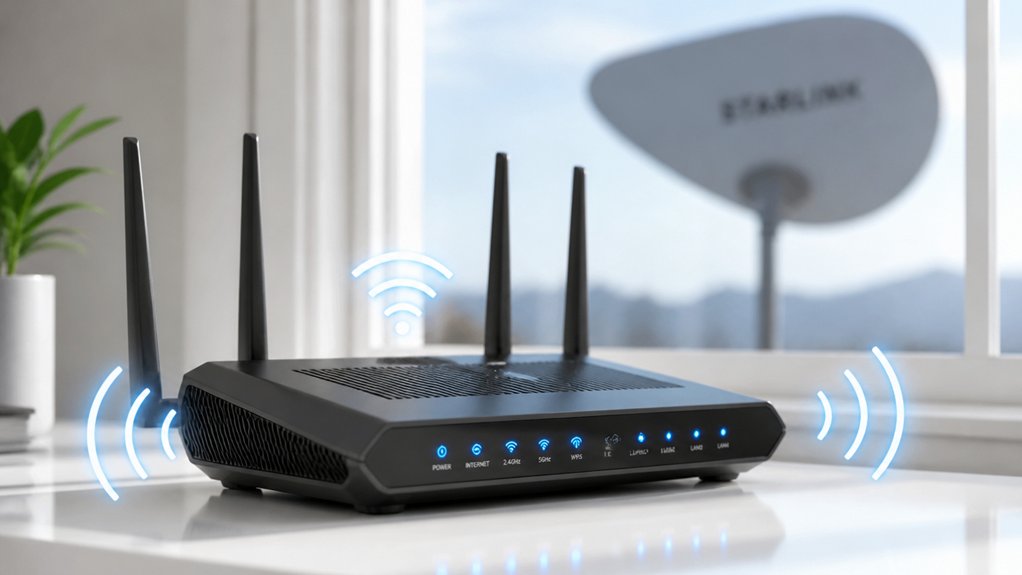
Choosing the right router for Starlink means checking five key factors before you buy. You’ll want to evaluate the Wi-Fi standard and speed the router supports, the coverage area it can handle, how well it’s compatible with Starlink’s system, the security protocols it uses, and how many wired ports it offers. Each of these factors directly affects your network’s performance, reliability, and long-term value.
Wi-Fi Standard and Speed
When picking a router for Starlink, the Wi-Fi standard it supports directly affects how fast and how reliably your devices connect. Wi-Fi 6 (802.11ax) handles more devices at once and delivers better speeds than Wi-Fi 5, making it a strong choice for busy households. If you want even more capacity, Wi-Fi 6E adds the 6 GHz band, which reduces interference and increases throughput.
For band configuration, dual-band routers cover basic needs by offering 2.4 GHz for range and 5 GHz for speed. Tri-band routers add a third channel, which helps when you’re running multiple high-demand devices simultaneously. Keep in mind that advertised speeds aren’t guaranteed—your router’s CPU, RAM, channel width, and your home’s layout all affect real-world performance.
Coverage Area Size
Coverage area determines how much of your home a single router can reliably reach. Most Starlink-compatible routers cover between 1,250 and 3,200 square feet, so matching that range to your home’s size is a practical first step. If your home exceeds a single router’s limit, choose a mesh-capable system and add nodes to extend coverage room by room. Keep each node within two rooms of the main unit to maintain a strong signal. Construction materials also affect range, so concrete or stone walls can cut coverage significantly. For outdoor spaces like patios, use an IP56-rated or weather-resistant router mounted on an exterior wall. Measure your home’s square footage, note wall materials, and then match those numbers to a router’s stated coverage before buying.
Starlink System Compatibility
Before buying a router, confirm it’s compatible with your specific Starlink generation—Gen 2, Gen 3, Gen 4, or Mini—because some routers explicitly exclude Gen 1 support. Check the product listing for exact kit compatibility, especially if you’re using a Gen 3, Mini, or V4 system, since certain routers are built exclusively for those kits and won’t work with third-party or non-Starlink systems.
Also verify whether the router supports mesh expansion, since mesh-ready designs let you add nodes to extend coverage across your space. Look for dual-band or tri-band Wi-Fi 6 or 6E support, which improves backhaul performance. Finally, confirm power requirements—many Starlink-compatible routers run on 12V—and check whether Ethernet passthrough or remote management is included.
Security Protocol Strength
Security protocol strength determines how well your router protects your network from unauthorized access, so it’s worth checking which standard a router supports before you buy. Some Starlink-compatible routers use WPA2-PSK, while others support WPA3. Choose WPA3 when possible, since it offers individualized data encryption and stronger protection on open networks. If your router supports both, enable WPA3 as the primary standard through the management app. For mesh or hybrid setups, check each node’s firmware and update it regularly to maintain consistent security across your network. Basic firewall and parental controls add another layer of protection, so enable those features if your router includes them. Always verify that your chosen router supports the latest protocol your devices can handle.
Wired Port Availability
How many wired devices you need to connect directly to your router matters more than most people expect. Most Starlink-compatible routers include 1 to 2 LAN ports, each supporting up to 1 Gbps. That’s enough for a PC, console, or smart TV, but it fills up quickly.
Check whether the model you’re considering has a removable port cover, since some compact units hide their LAN ports behind one. If you’re running a home office or gaming setup with multiple wired devices, don’t rely on the router’s built-in ports alone. Connect a separate network switch to one LAN port, then plug all your wired devices into the switch. This expands your wired connections without upgrading your router or sacrificing speed.
Mesh Network Support
Whether your home spans multiple floors or has thick walls that choke your signal, mesh network support lets you extend Starlink coverage by adding nodes that work together as one unified network. Place nodes strategically in hallways, stairwells, or large rooms to eliminate dead zones without running long cable runs everywhere.
Before buying, confirm that your chosen mesh system is compatible with your Starlink generation, since Gen 3 and Gen 4 Mini hardware can have specific limitations. Look for systems that use a dedicated 6 GHz or 6E backhaul channel, which keeps node-to-node communication separate from your devices’ traffic. Also verify that your primary router supports Wi-Fi 6 or 6E and delivers enough LAN bandwidth so the mesh backhaul doesn’t create a bottleneck that slows everything down.
Power and Portability
Once you’ve sorted out mesh coverage, power and portability become the next practical concern, especially if you’re using Starlink in an RV, boat, or remote work site. Look for routers that run on 12V DC power, since that matches most vehicle and solar setups without needing a converter. Keep weight under two pounds to make packing and repositioning easier. Dual-band routers with built-in power supplies reduce the number of cables you’ll carry. If you’re relying on a laptop or power bank, choose a router with USB-C Power Delivery support. Avoid bulky units that require wall adapters unless you have a reliable inverter on hand. For outdoor deployments, pick a weather-resistant model so moisture and dust don’t interrupt your connection mid-use.
Final Thoughts
Choosing the right router for your Starlink setup comes down to your space, usage, and budget. If you’re at home, go with a mesh or Wi‑Fi 6 option for wide, reliable coverage. For travel or RV use, pick a compact or 12V‑powered model. Match the router to your specific need, check compatibility with your Starlink generation, and prioritize LAN ports if you’re connecting wired devices.